A board member asks one question: "Of that partner-sourced number, how much did partners actually bring us?" The VP of Channel says 42 percent. Then the board member asks what counts as sourced. The room goes quiet.
If you cannot answer that in one sentence, the number is a guess with a decimal point.
The quiet problem with partner-sourced pipeline
Most partner programs report a partner-sourced number. Far fewer have written down what qualifies. The CRM has a field, someone fills it in, and the total rolls up to a slide.
The trouble starts when sourced and influenced get blended. A partner who introduced the deal and a partner who showed up on the final call both land in the same bucket. The number grows, and nobody can say why.
It is not a lie. It is a definition nobody wrote down.
Nobody is padding the number on purpose. A rep tags a deal because a partner was mentioned. An admin maps a lead source field years ago and no one revisits it. Each choice is reasonable alone. Together they produce a figure that falls apart the first time a CFO pulls the thread.
The short version
A partner-sourced deal is one where a partner created the opportunity: the first qualified conversation happened because of a partner introduction or referral. An influenced deal is one a partner helped advance after the opportunity already existed. Defining the two separately, in writing, is the first of four attribution decisions: Definition, Credit rules, Data source, and Cadence. Without it, the other three have nothing to stand on.
1. What event makes a deal partner-sourced?
A partner sends a warm intro on Monday. Your rep books a call Wednesday. The opportunity opens Friday. Which moment counts?
A defensible definition names one trigger and holds it constant. For example: the partner made the first introduction to a named buyer, and no sales or marketing touch with that account preceded it. That is one sentence. It can be audited. It can be explained to a board in ten seconds.
2. Where does sourced end and influenced begin?
A prospect is already in your pipeline. A partner joins a demo, vouches for you, and the deal closes. That partner mattered. They did not source it.
Influenced pipeline is real value, and you should track it. The mistake is adding it to the sourced total. Report two lines: sourced, and influenced. The sourced line stays small and honest. The influenced line shows the broader reach of the program.
3. Who decides, and when?
If the tag is set by whichever rep closes the deal, the definition drifts with every quarter-end push. Defensible programs set the source at opportunity creation and lock it. Changes require a reason and a name.
The test: could two people looking at the same deal reach the same answer without talking to each other? If not, the definition is not finished.
4. Does the definition match what you pay for?
Referral fees and co-sell incentives imply a definition. If you pay a referral fee on deals your board report calls influenced, or report as sourced a deal you never paid anyone for, your program contradicts itself. Align three things: the reporting definition, the payout rule, and the partner agreement.
Why this matters now
Budget season rewards numbers that survive questions. A partner-sourced figure with no written definition is the first thing a finance leader challenges, and the channel budget is the first thing cut when it cannot be defended.
It also caps your growth. You cannot decide which partners to invest in if you do not know which ones create pipeline and which ones attend calls. A blended number hides exactly the partners worth scaling.
You cannot defend what you cannot see
Write the definition. Separate sourced from influenced. Lock the tag at creation. Then the number you report is the number you can defend.
Prove your channel first. Then scale it.
Want to see how your program scores on all four decisions? Take the Partner-Sourced Pipeline Scorecard (/the-partner-sourced-
FAQ
Q: What is the difference between partner-sourced and partner-influenced?
A: Partner-sourced means a partner created the opportunity through a first introduction or referral. Partner-influenced means a partner helped move an existing opportunity forward. Sourced measures origination. Influenced measures assistance. Report them as separate lines.
Q: Should partner-influenced pipeline be included in the partner-sourced number?
A: No. Combining them inflates the sourced figure and makes it hard to defend. Track influenced pipeline separately so you can show total partner impact without weakening the number your board relies on.
Q: Who should decide whether a deal is partner-sourced?
A: The rule should be written in advance and applied at opportunity creation, not by the rep who closes the deal. Changes to the tag should require a recorded reason so the number stays stable quarter to quarter.
Q: Why does my CRM partner-sourced number differ from what partners report?
A: Usually the two sides use different definitions. A partner may count any deal they touched, while your CRM tags one lead source field. Agree on a single written definition and a shared data source to close the gap.
Q: How do I know if my partner-sourced number is defensible?
A: Ask whether two people could look at the same deal and reach the same answer using only your written rule. If the answer depends on who you ask, the number is not yet defensible.
Insights
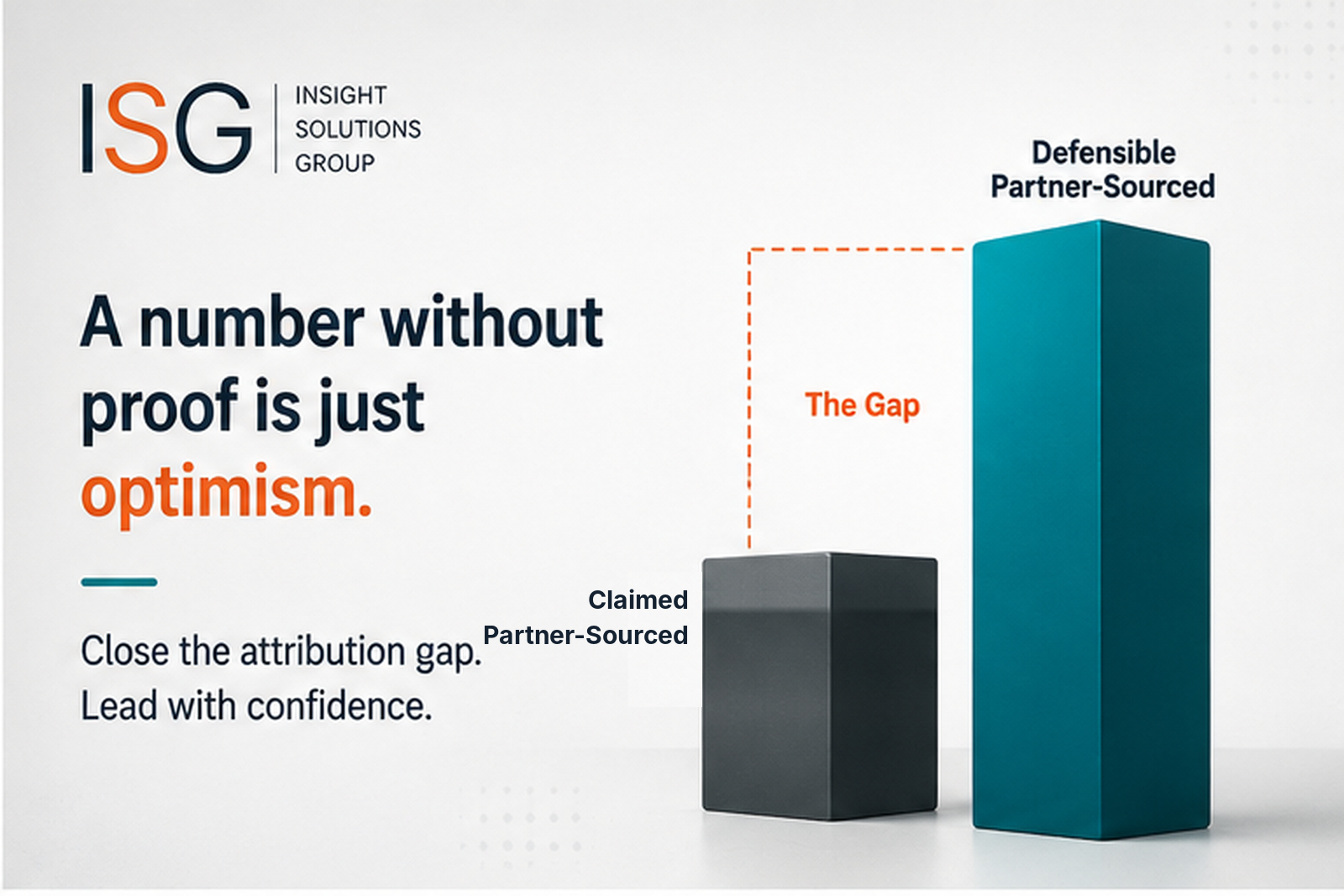
Find out what your data actually supports.
A working session reads your real pipeline against the four decisions and shows the gap between the number you report and the number you can defend.